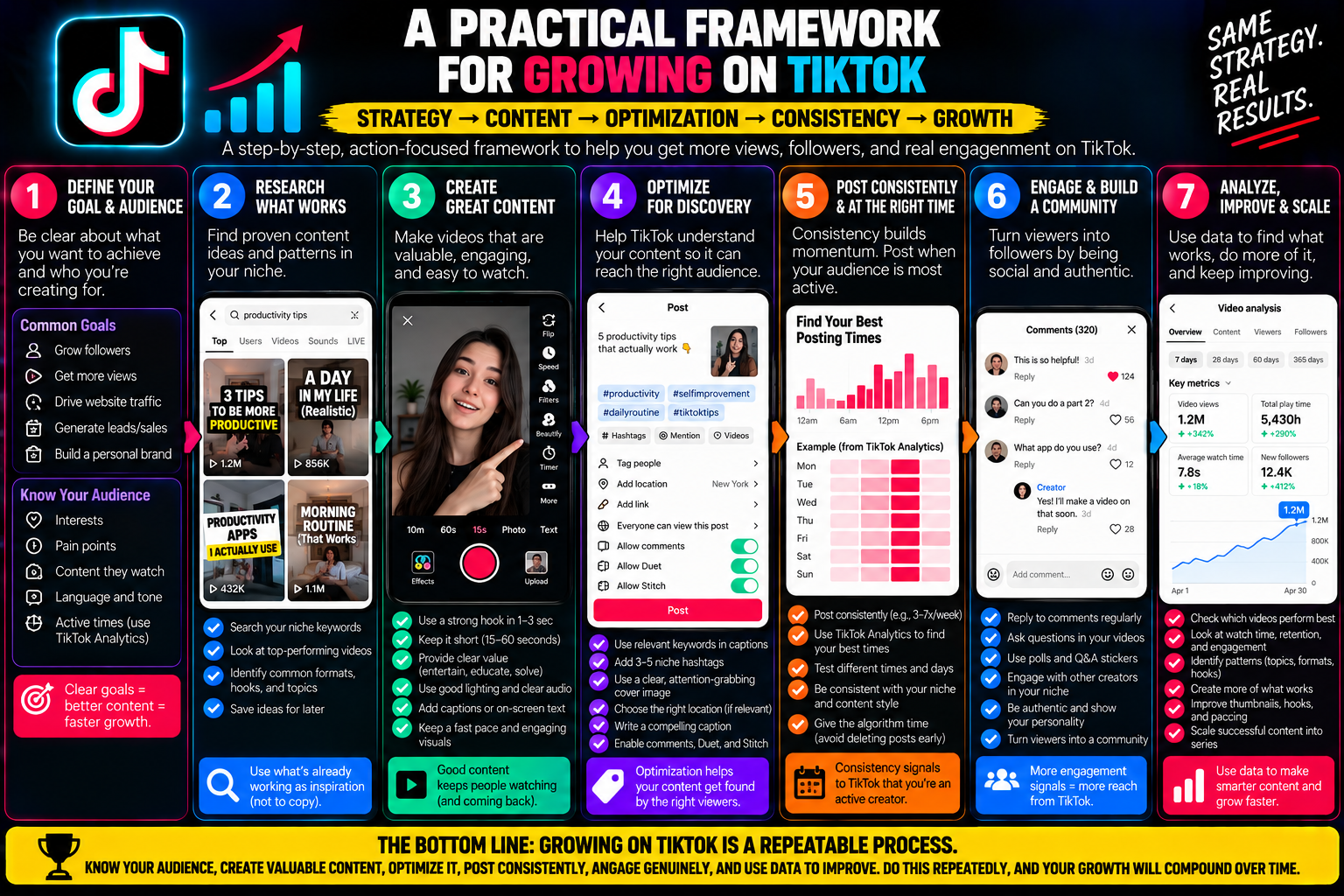
A clear niche helps viewers quickly understand what your TikTok account offers and whether it is worth following. When your videos repeatedly serve a recognizable audience, people can anticipate the value they will receive from future posts. This clarity also makes it easier to plan content, communicate your expertise, and build a community around shared interests. how to grow on TikTok
Start by identifying the people you want to reach. Consider their interests, goals, questions, or recurring frustrations. Rather than defining an audience as “people who like lifestyle content,” make the description more useful: for example, first-time renters looking for practical ways to furnish a small apartment. Then decide on a repeatable content promise, such as sharing affordable room ideas and straightforward decorating advice. A strong promise gives each video a purpose while helping viewers know what to expect.
If your subject is too broad, narrow it by choosing a particular audience, perspective, format, or problem to address. A general cooking account might focus on quick meals for busy students, while still covering different cuisines and ingredients. Avoid narrowing so far that every video must repeat the same tip. Your niche should provide direction, not become a limitation. Ask whether you can imagine producing many useful videos within the topic; if not, widen it slightly or connect it to a neighboring interest.
Choose a few related content pillars to create variety within a consistent focus. A fitness creator might share beginner workouts, form guidance, and realistic habit-building strategies. These themes give you room to explore while reinforcing the same overall value. Keep the audience and central promise recognizable across pillars, even as individual formats and subjects change.
Finally, treat your niche as a working definition rather than a permanent label. Test themes with a series of posts, then review which ones attract the viewers you intend to serve. Consider meaningful signals such as comments, saves, and repeat engagement, not just total views. Use what you learn to refine your emphasis. A niche can evolve as audience needs become clearer, provided the account still delivers a coherent reason to follow.
The opening moments of a TikTok video often determine whether viewers stay or swipe away. A strong hook quickly gives people a reason to continue by making the topic relevant, promising useful information, or creating curiosity. Rather than easing into the subject, begin with the detail that matters most to the viewer. A clear opening can also help people understand immediately whether the video is intended for them.
Several approaches can make an opening more compelling. State a relatable problem, such as a common mistake or frustrating situation your audience recognizes. Promise a specific result, like showing how to complete a task in fewer steps, and then deliver on that promise. A surprising contrast can challenge an expectation, while a focused question invites viewers to consider their own experience. You can also begin with an intriguing visual or action—a transformation, an unusual object, or the result before the explanation—to give viewers a reason to watch what happens next. Choose an approach that fits your niche and the value your video provides.
Keep the wording concise and make the subject clear without delay. Long greetings, broad background, and slow introductions can use up attention before the content begins, so remove anything that does not help viewers understand why they should stay. A hook should accurately represent the video; exaggerated or misleading claims may attract a momentary view but can undermine trust and prompt viewers to leave when the promised content does not appear. Make sure the rest of the video supports the opening’s claim.
There is no single hook that works for every topic or audience. For similar ideas, write several opening versions and test them across separate videos. One version might lead with a question, while another starts with a result or a visual demonstration. Compare how viewers respond, including whether they continue watching, and use those observations to refine future openings. Over time, this simple testing process can help creators identify the approaches that best fit their content and audience.
A high proportion of viewers who watch a TikTok video through to its final seconds can indicate that its idea, pacing, and delivery held their attention. Completion rate is useful because it shows whether people stayed for the full experience, but it should not be treated as a verdict on success by itself. A brief clip may be easier to finish than a longer one, and a video can still prompt shares, comments, saves, or profile visits without every viewer reaching the end. Consider completion alongside these responses and the purpose of the post.
Give each video a clear, simple structure. Establish the premise quickly so viewers understand what they will see or learn, then deliver the information or entertainment in a logical sequence. Maintain momentum through relevant changes, such as a new example, a shift in camera framing, an on-screen demonstration, or a concise verbal transition. These changes should support the idea rather than distract from it. Finish with a satisfying payoff: an answer to the opening question, a completed demonstration, or a useful takeaway that rewards viewers for staying.
Editing for completion often means removing material, not adding more effects. Trim repeated points, long pauses, and setup that does not help viewers understand the premise. Use captions when they clarify key information or make speech easier to follow, and show a process when seeing it is more useful than describing it. Match the video’s length to the idea; do not stretch a simple point or rush a topic that needs explanation. After posting, review retention patterns to see where viewers leave, and consider comments or other responses for context. Refine the pacing and structure around those observations, making each edit purposeful rather than changing the video simply to make it busier.
A sustainable TikTok content system connects a clear niche with strong openings and videos that hold attention through the finish. Start by defining the audience and the value your account reliably offers, then plan a small set of recurring formats that deliver on that promise. These might include quick tutorials, answers to common questions, demonstrations, or short observations. Repeated formats make planning more manageable and help viewers understand what to expect. Publish at a pace you can maintain, rather than chasing a schedule that compromises quality or leads to burnout. Consistency gives you enough evidence to learn, while a focused range of topics keeps your account recognizable.
Treat each post as a useful test, and change one variable at a time. For example, keep the topic and format steady while testing a more direct opening; later, adjust pacing, topic angle, or format. This makes it easier to interpret why a video performs differently. Review watch time and completion to assess whether viewers stay, and rewatches to see whether they return to a moment or find the video worth viewing again. Comments can reveal questions or points of confusion, while shares and follows suggest that viewers found lasting value. Consider whether engagement comes from the audience you intend to reach, not only how large the response is.
Look for patterns across multiple posts before changing your plan. A single viral video may reflect timing, broad appeal, or an unusual subject, so it does not automatically prove that a format is repeatable. A more dependable signal is similar performance across several posts, especially when watch behavior, meaningful engagement, and relevant new followers align. Record the topic, format, opening, and key indicators for each test, then compare results over time. Turn recurring audience questions into future prompts, and revisit the plan periodically to emphasize approaches supported by evidence. Keep the core promise clear as you refine details: experimentation should improve how you serve your intended viewers, not make the account feel unrelated from one post to the next.